
Luxury clothing is often judged by its price tag, but price alone does not explain whether a garment is genuinely worth buying. The real difference between ordinary and luxury clothing is usually found in the details you can see, feel and experience over time: the quality of the fabric, precision of the cut, construction of the garment, finishing, fit, and the thought behind how it is made.
For shoppers building a more considered wardrobe, understanding these details is more valuable than simply looking for a designer label.
A well-made coat, tailored blazer or refined accessory should not only look impressive when it is new. It should remain relevant, comfortable and wearable long after the initial purchase.
That is the real question behind luxury fashion:
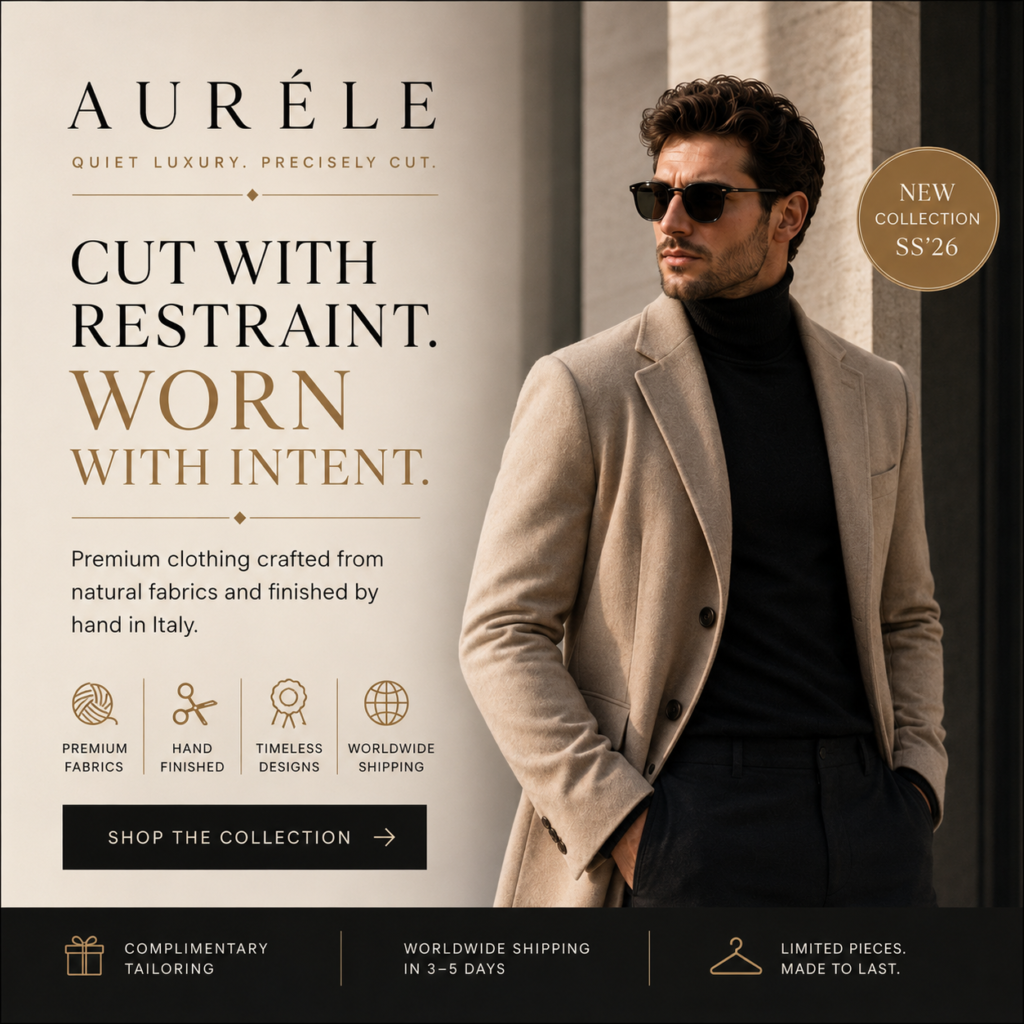
What are you actually paying for?
What Is Luxury Clothing?
Luxury clothing is premium apparel distinguished by a combination of material quality, construction, craftsmanship, fit, design, scarcity and attention to detail.
A higher price does not automatically make clothing luxurious. A garment becomes more compelling when the price reflects tangible qualities that improve the wearing experience.
These can include:
- Higher-quality fabrics
- Precise pattern cutting
- Better construction
- Carefully considered proportions
- Hand-finishing
- Quality linings and fastenings
- Skilled tailoring
- Limited production
- Traceable materials or manufacturing
- Long-term wearability
The most useful way to evaluate luxury clothing is therefore not to ask, “Is this expensive?”
Instead, ask:
“What has gone into making this garment, and will I notice the difference over time?”
1. Fabric Is the Foundation of Luxury Clothing
The first thing experienced shoppers learn is that fabric matters.
Fabric determines how a garment feels against the skin, how it falls on the body, how it holds its shape and how it performs through repeated wear.
Two coats may look almost identical in an online photograph but feel completely different in person because of their fibre, weave, weight, finishing and construction.
Natural Fabrics and Fibre Quality
Luxury fashion frequently uses carefully selected natural fibres because their characteristics can contribute to comfort, drape and longevity.
Depending on the garment, these may include:
- Long-staple cotton
- Merino wool
- Cashmere
- Silk
- Linen
- High-quality leather
However, simply calling a fabric “natural” does not automatically make it premium. Fibre quality, origin, processing, weaving, finishing and garment construction all matter.
AURÉLE’s current collection, for example, specifies materials including 100% long-staple cotton, mulberry silk lining, brushed cashmere, merino wool and vegetable-tanned leather.
That kind of material transparency gives shoppers something concrete to evaluate.
What Should You Check?
Before purchasing premium clothing, look beyond phrases such as “luxurious fabric.”
Check the actual composition.
Ask:
What is it made from?
How does the fabric suit the garment?
Is the material appropriate for the climate and intended use?
What care does it require?
The answers tell you considerably more than the word “luxury.”
2. Fit and Pattern Cutting Make a Visible Difference
A luxury garment should not simply have expensive fabric. It should be cut with intention.
Pattern cutting determines how a garment sits on the shoulders, follows the body, creates movement and maintains its intended silhouette.
This becomes particularly obvious with structured clothing.
A poorly proportioned blazer can look uncomfortable even when made from excellent fabric. A well-cut blazer can look polished with minimal styling.
Why Precise Tailoring Matters
Small adjustments can change the entire appearance of clothing.
Shoulder position, sleeve length, trouser break, coat length, waist placement and overall proportion all influence how the garment looks.
That is why tailoring is not merely an alteration service. It can be part of the luxury experience itself.
AURÉLE currently highlights complimentary tailoring on every order, while its brand positioning centres on precise cutting and hand-finished garments.
For shoppers, this provides a useful lesson:
A garment should be evaluated on how it is intended to fit—not simply on the size printed on the label.
3. Craftsmanship Is Where Luxury Becomes Tangible
Craftsmanship is one of the clearest differences between a mass-produced garment and a carefully constructed piece.
Look closely at:
- Seam finishing
- Stitch consistency
- Button attachment
- Lining
- Hems
- Closures
- Pockets
- Edge finishing
- Internal construction
These details may not be obvious from several metres away, but they influence how a garment behaves over time.
AURÉLE’s current product presentation provides a useful example. Its Camille Coat is described as double-faced camel wool, sourced from a single mill in Biella, with approximately six hours of hand-finishing per coat.
That information changes the way a shopper can evaluate the product.
Instead of simply seeing “camel coat,” you can understand the material, origin, construction and labour involved.
4. Luxury Clothing Is About Construction, Not Decoration
One of the biggest misconceptions about luxury fashion is that more decoration means more luxury.
It doesn’t.
A garment can be completely understated and still be exceptionally well made.
In fact, minimal clothing often makes construction easier to judge because there are fewer decorative elements hiding the details.
Consider a simple wool coat.
There may be no visible embroidery, logo or dramatic embellishment. Its quality can instead come from:
- The wool itself
- The pattern
- The drape
- The shoulder construction
- The finishing
- The lining
- The stitching
- The balance of the silhouette
This is particularly relevant to the quiet-luxury movement, where the emphasis is often placed on material, proportion and subtlety rather than obvious branding.
5. Small-Run Production Can Change the Buying Experience
Production volume can influence how a brand approaches its clothing.
Mass production is designed around scale and consistency across very large quantities. Small-run production can allow a brand to focus more closely on individual collections, materials, finishing and design details.
That does not mean every small-batch product is automatically better.
It means shoppers should investigate why a brand produces in limited quantities.
AURÉLE states that its collections are produced in small runs and describes relationships with mills that it has worked with for more than a decade. Its brand story also says the company began as a two-person atelier.
These details provide context for its positioning as a considered ready-to-wear label.
6. The Real Value of Luxury Clothing Is Cost Per Wear
Price is easiest to understand when you stop thinking only about the initial purchase.
Consider two coats.
Coat A: ₹20,000 and worn five times.
Coat B: ₹60,000 and worn 100 times.
The second coat costs three times as much initially, but its cost per wear is dramatically lower.
This is why wardrobe value should be measured through use, not simply purchase price.
A well-made garment can earn its place in a wardrobe when it is:
- Worn repeatedly
- Easy to style
- Appropriate across seasons
- Comfortable
- Repairable or maintainable
- Relevant beyond a short trend cycle
This is also why timeless design can be more valuable than novelty.
7. Timeless Design Protects Your Wardrobe From Trend Cycles
Fashion changes constantly.
Silhouettes rise and fall. Colours become popular and disappear. Certain details dominate one season and look dated a few years later.
Luxury clothing does not have to ignore trends, but the strongest wardrobe pieces usually have enough design integrity to survive beyond a single season.
A timeless piece often relies on:
- Balanced proportions
- Refined colours
- Clean construction
- Minimal unnecessary detailing
- Versatile styling
- Strong materials
This makes it easier to combine with future purchases.
The objective is not to eliminate personality from your wardrobe. It is to make sure your statement pieces have dependable foundations around them.
8. How to Tell If Premium Clothing Is Actually Worth It
Before purchasing expensive clothing, use this simple evaluation.
The Luxury Clothing Quality Test
Fabric:
Is the material clearly specified and appropriate for the garment?
Fit:
Is the silhouette well proportioned? Is tailoring available?
Construction:
Can you identify quality stitching, finishing, lining and hardware?
Design:
Will the garment still feel relevant beyond one trend cycle?
Versatility:
Can you style it with clothing you already own?
Transparency:
Does the brand explain where and how the garment is made?
Longevity:
Does the product appear designed for repeated wear rather than one season?
If most answers are yes, the price becomes easier to understand.
9. Luxury Women’s Fashion Should Feel Personal
The best luxury wardrobe is not necessarily the one filled with recognisable labels.
It is the one that feels unmistakably yours.
That might mean a beautifully cut coat that becomes your winter uniform. It could be a tailored blazer that works from a meeting to dinner. It could be a leather accessory that becomes part of your everyday routine.
Luxury should reduce the feeling that you constantly need something new.
Instead, it should make existing pieces work harder.
Build Around Three Categories
A practical premium wardrobe can start with three foundations:
Outerwear
A well-made coat or jacket can transform simple clothing and extend the usefulness of an entire wardrobe.
Tailoring
Blazers and structured separates provide polish and can be styled formally or casually.
Accessories
Leather and silk accessories can introduce texture, colour and personality without requiring a complete new outfit.
These three categories are also the current pillars of AURÉLE’s wardrobe: Outerwear, Tailoring and Accessories. The brand describes them as pieces designed to outlast a season and work with clothing customers already own.
10. Why AURÉLE Takes a Different Approach
AURÉLE positions itself around “Quiet Luxury, Precisely Cut”, with considered ready-to-wear made from natural fibres and finished by hand in small ateliers across Northern Italy.
Its current collection gives shoppers unusually specific information about individual pieces.
For example, the Camille Coat is presented with its fabric, origin, fit and hand-finishing details rather than being described only through aesthetic language. The coat uses double-faced camel wool from Biella, has a relaxed fit and is described as receiving six hours of hand-finishing.
This is important because premium fashion should give customers enough information to make an informed decision.
The brand also states that its collections are produced in limited runs and that its philosophy began with the belief that a garment should be worth repairing rather than replacing.
That philosophy changes the purpose of the purchase.
Instead of asking:
“Is this fashionable right now?”
you begin asking:
“Will this still deserve space in my wardrobe years from now?”
That is a much more meaningful definition of luxury.
What Should You Pay for in Luxury Clothing?
If you are considering investing in premium women’s clothing, prioritise the elements you will experience every time you wear it.
Pay for:
- Better fabric
- Precise cutting
- Skilled construction
- Useful tailoring
- Strong finishing
- Versatile design
- Comfortable fit
- Thoughtful production
- Long-term wearability
Be cautious about paying simply for:
- A large logo
- Artificial scarcity
- Trend-driven design
- Excessive decoration
- Vague claims without product information
A high price deserves a clear explanation.
The more transparent the brand is about materials, construction, sourcing and production, the easier it becomes for the customer to decide whether the garment represents genuine value.
Final Thoughts: Is Luxury Clothing Worth the Price?
Luxury clothing can be worth the price—but not simply because it is expensive.
Its value comes from what happens behind the price tag.
The fabric matters. The pattern matters. The fit matters. The stitching matters. The finishing matters. The production method matters. Most importantly, the garment should continue to matter after the excitement of the purchase has passed.
For a thoughtful wardrobe, the strongest luxury pieces are those you repeatedly reach for because they fit well, feel exceptional and work with the clothes you already own.
That is ultimately what makes premium fashion different.
Luxury is not about owning more. It is about choosing better.
Explore AURÉLE’s Outerwear, Tailoring and Accessories collection to discover considered ready-to-wear built around precise cuts, natural fibres and hand-finished details.
Frequently Asked Questions
What makes luxury clothing different from regular clothing?
Luxury clothing typically places greater emphasis on fabric quality, construction, fit, finishing, design and production. However, price alone does not guarantee quality. Shoppers should evaluate the actual materials and construction of a garment.
Is expensive clothing always better quality?
No. A high price does not automatically mean better quality. Look for specific evidence such as fabric composition, construction details, tailoring, finishing, manufacturing information and product longevity.
Why are natural fabrics used in luxury clothing?
Natural fibres such as wool, silk, cotton and cashmere can offer desirable characteristics including softness, breathability, warmth, drape and texture. Their quality still depends on fibre selection, processing and construction.
What should I look for when buying luxury clothing?
Start with seven factors: fabric, fit, construction, design, versatility, transparency and longevity. These provide a more useful assessment than brand recognition or price alone.
Is tailoring important in luxury fashion?
Yes. Precise tailoring can improve proportion, comfort and silhouette. For structured garments such as coats and blazers, small fit adjustments can make a substantial difference.
What is quiet luxury?
Quiet luxury is an approach to fashion that generally emphasises quality, understated design, refined materials, craftsmanship and versatility rather than prominent logos or excessive decoration.
How can I make luxury clothing worth the investment?
Choose pieces you will wear repeatedly. Prioritise versatile designs, high-quality materials, good fit and timeless silhouettes. Considering cost per wear can also help you evaluate the long-term value of a purchase.